Creation
1666 – 1679Foundation stone laid at Leerdam bastion by Commander Zacharias Wagenaer. Stone hauled from Signal Hill, lime and slate from Robben Island.
Did you know? The five bastions were named on 26 April 1679 after the titles of William III of Orange–Nassau.
British
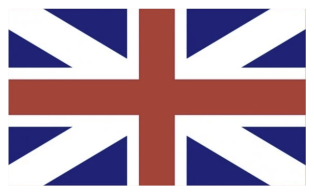
1795 – 1803First British occupation. The Castle surrendered after the Battle of Muizenberg, taken to deny revolutionary France the sea route to India.
Did you know? Despite its formidable design, the Castle was never besieged or stormed — both British takeovers were settled by battles fought elsewhere.

British
1806 – 1910Permanent British rule, formalised by the London Convention of 1814 which ceded the Cape for £6 million. By 1811 the Castle was a purely military installation.
Did you know? During the Second Boer War, spy Fritz Joubert Duquesne nearly tunnelled out of the Castle using only an iron spoon.
Dutch (VOC)
1652 – 1795The “Tavern of the Seas” — a self-contained colonial village with church, bakery, forge and the Governor’s residence behind the Kat cross-wall (1691).
Did you know? The Castle bell, cast in Amsterdam by Claude Fremy in 1697, weighs over 300 kg and remains the oldest functioning bell in South Africa.

Dutch (Batavian)
1803 – 1806A brief return to Dutch control under the Batavian Republic, handed back through the Treaty of Amiens.
Did you know? This second Dutch chapter lasted barely three years before Britain seized the Cape again after the Battle of Blaauwberg.

Union of South Africa
1910 – 1994Defence headquarters of the South African Army in the Western Cape; declared a National Heritage Site in 1936.
Did you know? Throughout the apartheid era, the Castle remained closely tied to the military establishment that enforced it.

Republic of South Africa
1994 – PresentTransformed into a centre for nation-building, memory, healing and reconciliation — while still home to the Cape Town Highlanders Regiment.
Did you know? Four bronze “Kings of the Castle” — Doman, Cetshwayo, Langalibalele and Sekhukhune — now stand before the De Kat Balcony in an act of post-apartheid reclamation.