When we look at the Castle today, we see stone. We should
also see people, because the story of who built
this fortress is inseparable from some of the darkest
chapters in South African history.
Workforce
Trafficked across the Indian Ocean
The enslaved workers were forcibly trafficked from
Madagascar, Mozambique,
the western coast of India, and the
Dutch East Indies.
Over the following decades, the VOC would bring approximately
60,000 enslaved people to the Cape. This
reshaped the entire demographic character of
the colony, and its legacy can be felt in Cape Town’s
culture, its cuisine, and the Afrikaans language itself.
Building Materials
Signal Hill stone, Robben Island slate
The building materials were sourced locally wherever possible.
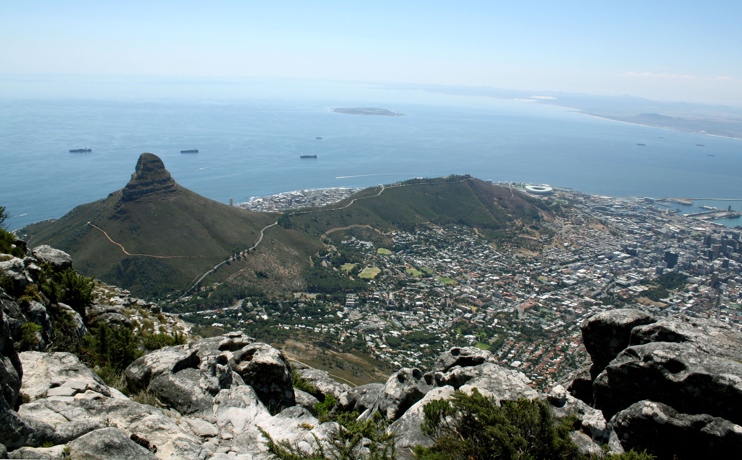
Stone for the outer walls and foundations was quarried from
Signal Hill - the same hill that looms
above the city today.
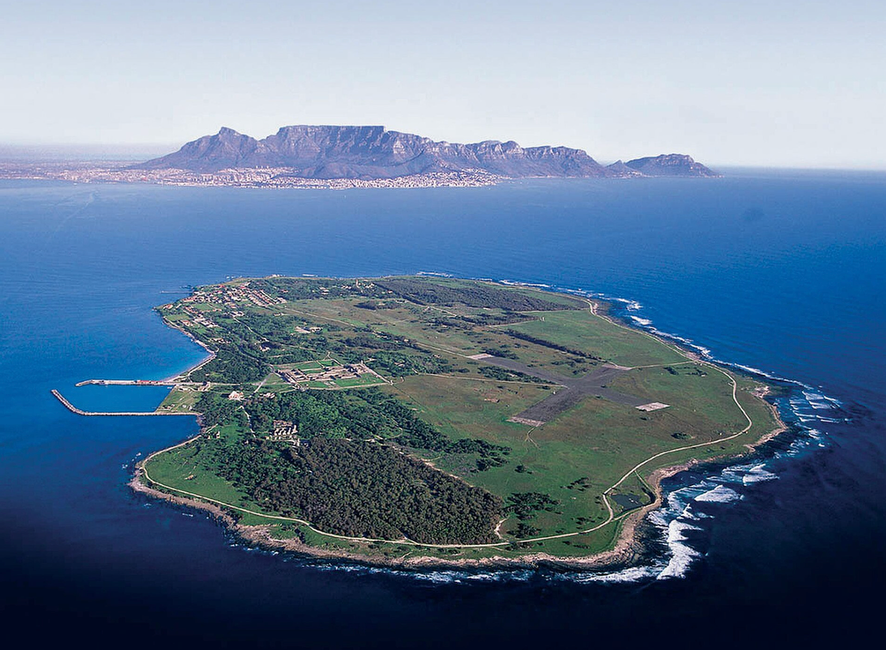
Blue slate and lime were transported from Robben
Island, a few kilometres offshore in Table Bay.
It is ironic that the island which supplied building
materials for the seat of colonial power would, three
centuries later, be used as the prison where Nelson Mandela
served eighteen of his twenty-seven years of imprisonment.
Signal Hill - quarried for the Castle’s outer wallsRobben Island - source of the Castle’s blue slate and lime
Human Story: Krotoa - The Woman Who Stood Between Two Worlds
Indispensable and invisible at the same time
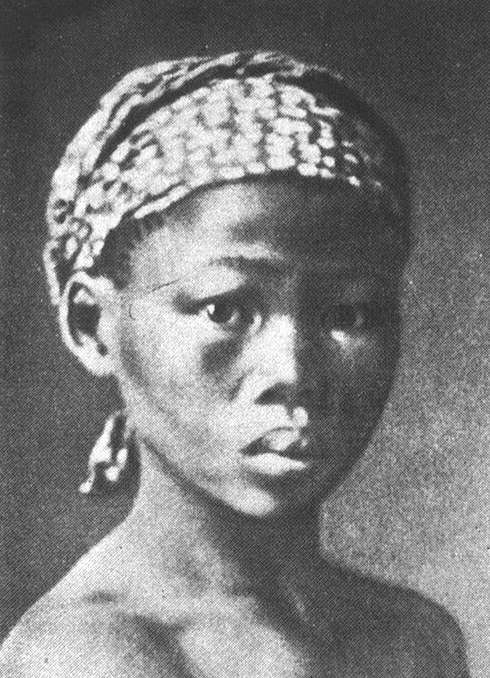
Krotoa was a young Khoekhoe woman taken into Van
Riebeeck’s household as a child. She became the
colony’s most important interpreter. She was fluent in
Dutch, Portuguese, and Khoe - bridging two worlds that
had no other common language.
She was indispensable and invisible at the same time:
tolerated in Dutch society, valued when useful, rejected
when not. Krotoa married a Danish sailor. After her
husband’s death she was exiled to Robben Island, where
she died in 1674, five years before the Castle whose
colonial world she had helped build was even completed.
In 2016, more than 340 years later, a ceremony at the Castle
symbolically brought her home. A memorial to her now stands
in the grounds.